Scouting Report: Kristian Campbell’s Track To Fenway
By Riley Thompson ·
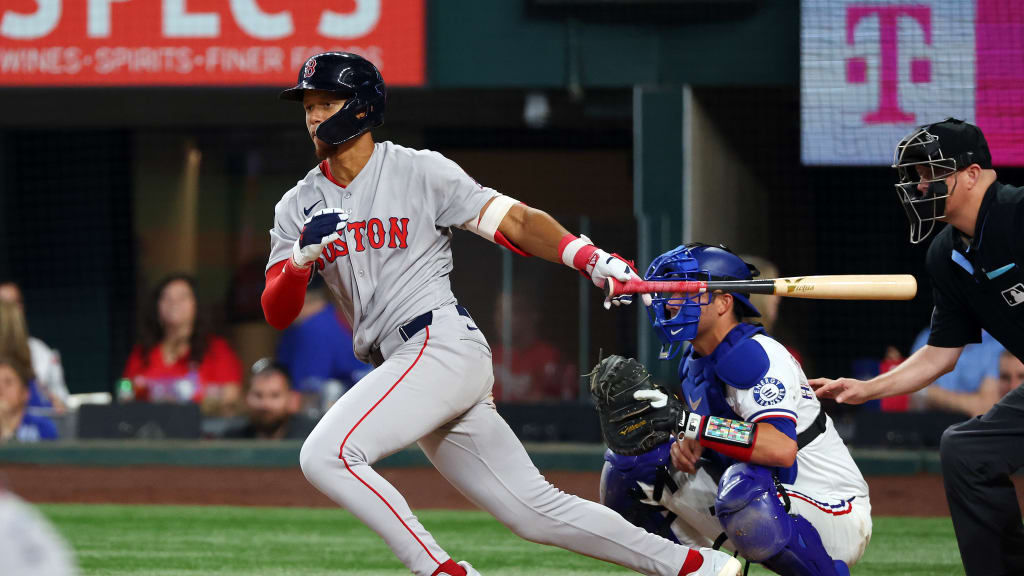
Amateur Track Record And Draft Story
Kristian Campbell arrived in pro ball as a late-blooming offensive profile rather than a famous showcase name. A right-handed hitter out of Georgia Tech with some defensive ambiguity, he fit the modern data-forward target: on-base skills, underlying contact quality, and enough athleticism to let the glove sort itself out later. Boston grabbed him in the 2023 draft as a bat-centric infielder whose swing decisions and batted-ball data flagged louder than his traditional tools.
At Georgia Tech, Campbell’s performance arc was more about refinement than explosion. His strike-zone control took a step forward in his draft year, with walk rates pushing into double digits and strikeouts staying in a playable band for a hitter who was starting to access more damage through the middle of the field. Contact quality metrics, from exit velocity bands to line-drive rates, backed the eye test that his compact stroke produced more impact than the body suggests at first glance.
Boston selected the right-handed hitter with the 132nd pick and paid him a full-freight bonus, signalling internal conviction about the bat. The defensive card read second base with a chance for some outfield, but the organization was effectively buying a decision-maker in the box who could grow into on-base driven production with sneaky pop. The internal bet was clear: if the approach played, the role would follow.
Early Pro Debut And Rapid Climb
From the day he entered the system, Campbell moved like a performance-driven promotion candidate. The Red Sox pushed him immediately into full-season ball and let the at-bats stack. The first extended sample showed the directional arrows you want to see from this archetype: walk rates living comfortably in the low-to-mid teens, strikeouts under control, and a slash line buoyed more by OBP than batting average inflation.
As he moved from A-ball into Double-A, Campbell’s profile sharpened rather than frayed. Instead of chasing production with a lengthened swing, he stayed inside the ball and trusted contact quality. The seasonal lines read like a player getting harder to game plan: on-base percentages hovering around or north of .360, enough slug to threaten the gaps, and fairly even platoon splits for a right-handed bat. For a player who projects to live somewhere on the spectrum between second base and a corner, that offensive shape matters.
Players that hit 4 homers and steal 4 bases in their draft season, rarely end up in a corner outfield position in the pros. There were some hints with Campbell that their might be a bit more power and speed in store. Boston's player development we're able to up that production to 20 homers, 50 XBH, and 24 SB in his first full pro season in 2024 while maintaining a 14% walk rate. He started tracking toward “table-setter with thump,” not a bottom-of-the-order on-base piece.
Offensive Foundation: Swing Decisions And Contact Quality
Hit Tool (55 future)
Campbell’s offensive anchor is his decision tree. He works from a compact right-handed base, slightly open, with a calm handset and a controlled gather rather than a big leg kick. The barrel gets to the zone quickly, and he stays on plane long enough to cover both halves without selling out for loft. The result is consistent line-drive contact and relatively modest swing-and-miss for a player who is comfortable working deep counts.
Zone control is the separator. He shows a mature understanding of what he can damage: he will take borderline pitches early, accepts the walk rather than forcing contact in neutral counts, and rarely chases below the zone. Misses tend to come on elevated velocity when he cheats in fastball counts or on well-located breaking balls that start as strikes, not on ugly expansions. The chase profile points to a hitter who should sustain above-average OBP even if BABIP normalizes.
In-zone swing decisions are almost as encouraging. Campbell does not let too many hittable pitches pass, especially middle-in heaters. His swing rates on heart-of-zone offerings are closer to an intent-driven run producer than a passive table-setter, which keeps pitchers from simply piping strikes and daring him to swing. That blend, selective but not passive, gives him a chance to be more than just an on-base specialist.
Power (45 now, chance to 50)
The raw strength is closer to average than plus, but he squeezes value out of his contact quality. Campbell creates backspin when he catches the ball out front, and his hardest contact already lives into the low-100s in exit velocity. Most of his damage is to the pull-side gap and left-center, with a swing path that is more line-drive than pure loft. Early minor league ISO numbers in the mid-.150s to low-.180s band support a projection of 12–18 home runs at peak, with a high double total.
The swing is not built to sell out for pull power, and that restraint works for him. When he tries to access extra juice, the barrel tends to stay in the zone for less time, and his contact quality dips rather than spiking. The better version of Campbell is the hitter who lives on hard line-drives and trusts that his strength gains will convert some of those into carries over the wall in friendly parks like Fenway.
Approach & Batted-Ball Mix
Campbell’s batted-ball profile fits the offensive identity. He keeps the ground-ball rate manageable, sprays the ball enough to punish shifts or aggressive positioning, and rarely posts empty fly-ball volume. The line-drive share is what pops in the data: he consistently lives several points above league average, which is both a signal of the swing plane and a reason his early BABIPs have sat comfortably north of .320 without screaming fluke.
Platoon-wise, small-sample noise exists, but he has not looked overwhelmed by same-side breaking balls or right-on-right changeups. The swing path lets him stay on the ball away and drive it to right-center, which acts as a pressure valve when teams live soft away from him. The one area to monitor is how his contact quality holds against high-octane velocity at the top of the zone. If the whiff rate there spikes, he profiles more as a strong-side platoon bat; if he keeps the swing compact, the everyday projection holds.
Defensive Fit: Second Base, Corner Outfield, Or True Utility?
Physical & Athletic Baseline
Campbell’s body is medium-framed with room for a bit more strength without sacrificing functionality. He moves like a 50 athlete: coordinated, not twitch-heavy, with enough foot speed for second base and left field but probably short of plus range at any spot. The actions are generally clean rather than flashy, and the body control is sufficient to finish plays on the move.
Second Base Evaluation (45 field, chance to 50)
At second, the key questions are first step and internal clock. Campbell’s lateral range is fringe-average, but he mitigates some of that with decent reads off the bat and under-control footwork. He turns the double play competently, sets his feet well around the bag, and rarely looks sped up. Hands are playable, with only occasional stiffness on balls that really eat him up.
The arm is a clean 50 from the right side with adequate carry for the pivot and throws from short right field in shallow shift looks. Footwork around the bag will need ongoing reps, but the floor here looks like serviceable everyday second baseman defense with the chance to tick to slightly above if his instincts continue to sharpen. He is unlikely to be a defensive asset on the card, but he should avoid being a liability.
Corner Outfield Evaluation (50 field in LF/RF)
Boston has wisely exposed Campbell to the outfield to widen the deployment menu. In left, the reads have come quickly. His straight-line speed is enough to cover the gap and line, and he closes reasonably well on balls in front. The routes are still a work in progress, but there is nothing in the footwork or hands that screams “emergency only.”
The arm plays fine in left and is passable in right on shorter Fenway-style throws. He will not intimidate runners, but he throws with reasonable accuracy and a quick release. In a world where many bat-first infielders shift to left and the glove simply survives, Campbell has a chance to be closer to neutral value there, especially if he continues to stack innings.
True Utility Projection
The real defensive intrigue lies in the combination: if Campbell ends up playable at second, left, some right field, and potentially emergency third, he brings roster flexibility that matters even if no single position grades out as plus. For that to materialize, the footwork at second must stay sharp, and the reads in the outfield need to become unconscious. Given his athletic baseline and work habits the org has praised, a 50 glove across two or three positions is a realistic target.
Role, Production, And 80Grade Context
Current Grade Snapshot

That portfolio points squarely toward a bat-led role, with the glove offering pathways rather than driving value. The production he has posted in the high minors, driven by OBP and gap power instead of inflated BABIP or park factors, supports at least a second-division regular outcome if the approach translates cleanly.
Red Sox Depth Chart Fit
Boston’s infield and corner-outfield depth is crowded with varying risk profiles: established big leaguers with defined strengths and holes, upper-level prospects with louder tools but more chase, and role players who fill defensive gaps. Campbell’s differentiator is that he lives on the things that age well: swing decisions, contact rates, and the ability to move into multiple spots without collapsing the run-prevention unit.
Within the org hierarchy, he projects in that 45–50 role band on the 80Grade scale today, with a realistic path to a 55 everyday evaluation if the defense at second firms up and the power lands in the average bucket. Given his age and the pace of his climb, a legitimate look in Fenway within the next 12–18 months is plausible. That aligns with a window where Boston will need cost-controlled plate appearances in the middle of the lineup card, especially if veteran contracts squeeze roster flexibility.
Trajectory And Projection: Everyday Second Baseman Or Matchup Piece?
Everyday 2B Outcome
For Campbell to clear the everyday threshold at second base, two things have to hold: the hit tool must play at or near 55 against major league velocity, and the defense has to land at least at 50. That version of him posts slash lines in the .260/.340/.410 band with 12–15 homers, a double-digit walk rate, and strikeouts in the low-20s percentile. Paired with steady but unspectacular defense, that is a credible everyday profile on a good club.
The underlying signals support that path. His swing decisions and ability to punish mistakes are not built on minor league command lapses alone. The batted-ball mix suggests his BABIP will not crater once he hits the big leagues, and his zone control should keep his OBP afloat even if he battles some early adjustment swing-and-miss.
Bat-First Utility / Matchup Role
The alternative, and a high-probability floor, is a bat-first multi-positional piece who starts four to five times a week but moves around the diamonds based on matchups. In that role, he hits in the 6–8 spots, gives the club on-base ability against right-handed pitching, covers second and left field as needed, and offers a stabilizing presence when injuries expose the depth chart.
This outcome becomes more likely if his defense at second never climbs above fringe-average or if major league high-end velocity exposes enough swing holes to push his production into the .240/.320/.380 range. In that case, the bat no longer comfortably carries a locked-in everyday job at a non-premium defensive value, but the combination of OBP, contact, and versatility still keeps him on a 26-man roster for a long time.
Upper-Range Outcome
The top of the range is an impact regular whose OBP skills anchor the top third of a lineup and whose defensive value is additive at second and left. That version of Campbell makes a subtle leap: the power creeps toward 18–20 homers, the doubles stack in Fenway’s gaps, and his feel for the strike zone becomes a genuine run-creation engine. That requires a little more physical strength, incremental gains in how often he turns on inner-third velocity, and continued polish in the field to avoid late-game defensive substitutions.
Given his current tool set and production, that impact outcome is plausible but not the median. The more credible projection is a steady regular or high-usage utility piece whose carrying traits are swing decisions and contact quality rather than loud tools. For a system that needs bankable major league plate appearances in the near term, that is a valuable trajectory in its own right. Campbell has already been a massive win for Boston's scouting and player development.