Wrigleyville Prospect Weekly: Hartshorn Is Lapping the Field, Kade Snell Wakes Up, and Brody McCullough Makes a Case at Knoxville
By Reed Kubiak ·
High-A Is Not a Challenge for Josiah Hartshorn
Josiah Hartshorn (A+, OF, Rank: 1) went 6-for-20 on the week with a homer, two doubles, two triples, and 11 RBI, drawing six walks along the way. The walk total matters as much as the damage: he reached base nearly half the time and still found pitches to drive for extra bases. Such a line would be loud at any level; at High-A from a 19-year-old sixth-round prep bat, it borders on absurd. His combined season slash sits at .278/.400/.512 across 94 games and two levels, and over the last 30 days he is hitting .274 with a .407 on-base percentage, three homers, five doubles, three triples, and 28 RBI in just 19 games. The RBI total alone shows how frequently he is doing damage with runners on base.
The profile here is a switch-hitter who controls the zone at an age when most prep corner bats are still learning how to read professional sequencing. He is a 50 hit tool with a 55 power grade, projected as a second-division first baseman, and the honest read right now is that he is ahead of that projection. The pressure point on this profile has always been the defensive home: if he ends up at first base only, the bat has to carry the whole thing. Through the first half of 2026, it is doing just that. He already put Single-A in the rearview mirror and High-A has not slowed him down. A Double-A assignment before September would not be a surprise, and if the power continues to translate against better arms, the second-division ceiling starts to look conservative.
Kade Snell Finds the Power Nobody Was Expecting
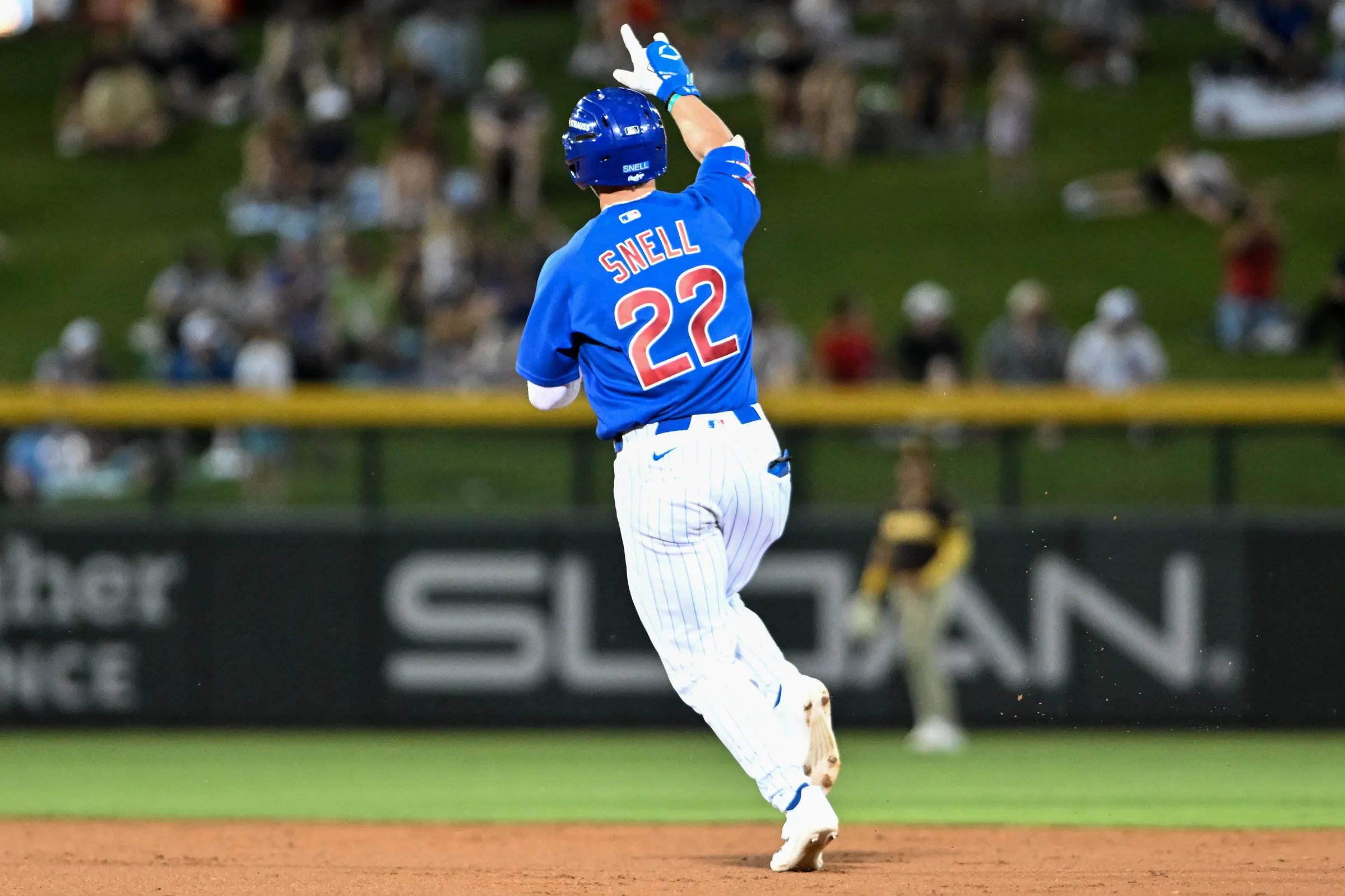
The scouting report on Kade Snell (A+, OF, Rank: 25) coming into this season was straightforward: contact bat, high makeup grades, limited ceiling, quad-A projection. His max exit velocity sat at 111.6 mph but zero professional home runs through August 2025 made the power projection skeptical at best. This week he hit three home runs across 27 plate appearances, his most productive stretch of the year and probably his career. He also added a triple and picked up five RBI. The surface stats are partly luck-assisted, his xwOBA of .371 trails the actual .530 wOBA significantly, but three home runs in a week is three home runs in a week for a player whose entire profile question mark has been whether the power would ever show up.
The season context is real. He has six homers through 235 plate appearances, which is a modest number, but over the last 30 days he is slashing .259/.344/.556 with four of those six coming in a 14-game stretch. That is not a fluke sample; it is a swing change or an approach shift showing up in the data. He is 24 and the projection still calls for a bench bat or platoon corner outfielder, and nothing about one hot month rewrites that. But the underlying bat was always there: 55 hit tool, 60 makeup and work ethic grades, and a college contact foundation that translated poorly in his first professional exposure. If even fringe-average power is real and sustainable, the quad-A ceiling gets a little higher. I would take the over on that power grade right now.
Moves
The Cubs made significant moves at the trade deadline, with Jefferson Rojas being the most prominent prospect traded. Rojas, a highly talented player with exceptional skills, advanced quickly to Double-A, faster than the Cubs anticipated. Given their roster, there was no room for him in the majors. While fans may be worried about trading a top-three prospect for a short-term bench bat and a rental pitcher with a 2027 option, Clay Holmes is expected to significantly impact the team, especially in the postseason and Tyrone Taylor will give great value against lefties. Ideally, the Cubs will secure Holmes on a new multi-year contract.
Additionally, the Cubs traded Brett Bateman and Ty Southisene for Kevin Gausman, a move I regard highly in terms of value. Both Bateman and Southisene primarily rely on their hitting and fielding but lack substantial future value for the Cubs. Gausman, though another rental, brings much-needed postseason experience.
However, my least favorite trade involved Braxton Garrett for Jonathon Long and Jace Beck. Beck is a minor part of this deal, with Long being the main asset. Long has excelled in Triple-A, posting a .819 OPS, but is an older prospect without a clear path in the Cubs' system. Though I believe Long can succeed in the majors if he reduces strikeouts, acquiring Garrett, who has struggled with injuries, is risky. The rationale behind this move remains unclear.
The Cubs also acquired reliever Ryan Zeferjahn, a promising and controllable talent, in exchange for beloved player Moises Ballesteros. The Cubs opted not to shuttle Ballesteros between the majors and minors. They also parted ways with Mason McGwire, a potential future bullpen piece. Ballesteros might have fit as a DH, but Zeferjahn brings significant future value to the Cubs' bullpen.
Finally, Kane Kepley was promoted to Double-A. In my view, Kepley is not only underrated within the Cubs organization but also league-wide. His exceptional walk rate adds immense value, and he has demonstrated speed and some power with 50 steals and a .414 slugging percentage in High-A. This promotion is well-deserved, and Kepley shows great potential.
Quick Hits
Brody McCullough (AA, RHP, Rank: 40) · fired five innings of one-run ball at Knoxville, scattering two hits with one walk and five strikeouts. He has been the quiet story of the last month at Double-A: 13.2 IP across three starts, a 1.98 ERA, a 0.73 WHIP, and 12 strikeouts against six walks since his promotion. The combined season ERA sits at 3.08 across just 26.1 innings, and the durability questions that define his profile make every clean outing carry extra weight. He is a 26-year-old with an up-down projection and a long injury history, but right now he is pitching his way into the conversation for a late-season callup role.
Ariel Armas (AA, C, Rank: 33) · went 3-for-8 with two doubles, a homer, three RBI, four walks, and a hit by pitch in 16 plate appearances. He struck out zero times. The walk rate is genuinely interesting: he has drawn 36 walks against 69 strikeouts through 320 plate appearances, which for a defensive-first catcher with a 40 hit tool is a meaningful quality-of-at-bat signal. A 65 fielding grade and a 60 arm give him a clear floor, and any week the bat produces like this is a reminder there is more offensive projection here than the line suggests.
Angel Cepeda (A+, SS, Rank: 21) · put up 5 hits, a double, a home run, two RBI, and six walks in 25 plate appearances. He has hit three homers and posted a .376 OBP over his last 30 days at High-A, which is a meaningful jump from where he started the year. The strikeout rate (50 in 184 A+ plate appearances) remains the central concern for a 45 hit tool profile, but the six walks this week point to the same approach improvement that Cepeda needs to sustain if he is going to reach his utility or second-division ceiling. He is 20 years old; there is plenty of time.
Pierce Coppola (A+, LHP, Rank: 39) · threw 4.2 scoreless innings, allowing just two hits with no walks and four strikeouts. Over his last four High-A outings he has posted a 3.68 ERA across 14.2 innings, which is a reasonable stretch for a 23-year-old with a 94-96 mph fastball and a high slot that creates real downward angle. The command (40 grade) has been the issue all year; the combined walk total stands at 29 in 56 innings. When he stays ahead in counts the fastball-slider combination plays, and this week he stayed ahead consistently enough to finish deep into the game without a free pass.
Nazier Mulé (A+, RHP, Rank: 27) · struck out 8 in 3.1 innings but allowed 3 earned runs on 4 hits and a walk. The 8-strikeout line in 3.1 frames is the Mulé pitch: a 95-98 mph fastball that generates empty swings when he is ahead, but 27 walks in 43.1 innings on the season shows the command (40 grade) is still the bottleneck. He is 21 and post-Tommy John; the stuff is not the problem.
Grant Kipp (AAA, RHP, Rank: 11) · gave up 4 earned runs in 4.2 innings at Iowa, walking 3 and striking out 3. The Triple-A ERA sits at 6.00 through 24 innings since his promotion, a stark contrast to the 4.03 he posted at Double-A. He has a 55 curveball and a full five-pitch mix, but the lack of a true plus offering makes any command slip in Iowa expensive. The changeup (40 grade) keeps left-handed bats comfortable, and that problem is not going away at the highest level.